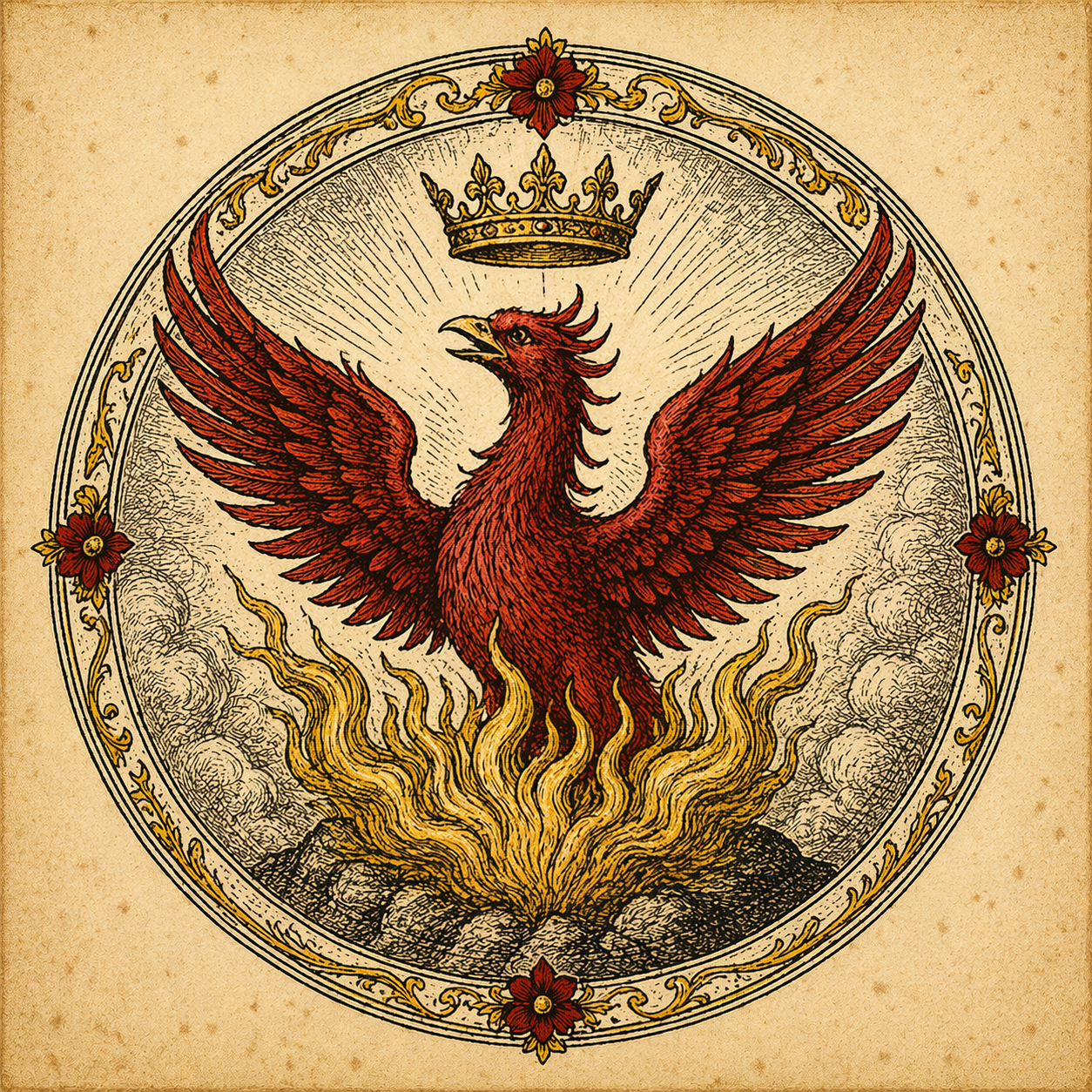
I. Pentecost: The Fire Descends
If Nigredo is Good Friday, Albedo is Easter, and Citrinitas is the ascended and ascending
Christ in the forty days — then Pentecost is Rubedo. The descent of the Holy Spirit as
tongues of fire (Acts 2:1–4) is the supreme Rubedo event in salvation history: the
matter of the Church, purified through the years of discipleship, washed in the waters
of baptism, oriented in the ascended Christ’s golden presence, at last receives the fire
that completes its transformation. The disciples leave the Upper Room speaking every language.
The stone begins its projectio.
The red of Pentecost is the same red as Rubedo: the red of blood, of fire, of wine,
of love consummated. It is not the red of violence but the red of gift — the passionate,
irreversible giving of the divine life into creaturely form. The Spirit poured out
at Pentecost is not a consolation prize for the departed Christ; it is the very
life of Christ communicated without remainder to his Body. The Rubedo of the
Church is the Spirit-indwelt community that can now transmute the world.
✠
II. The Blood of Christ and the Eucharist as Repeated Rubedo
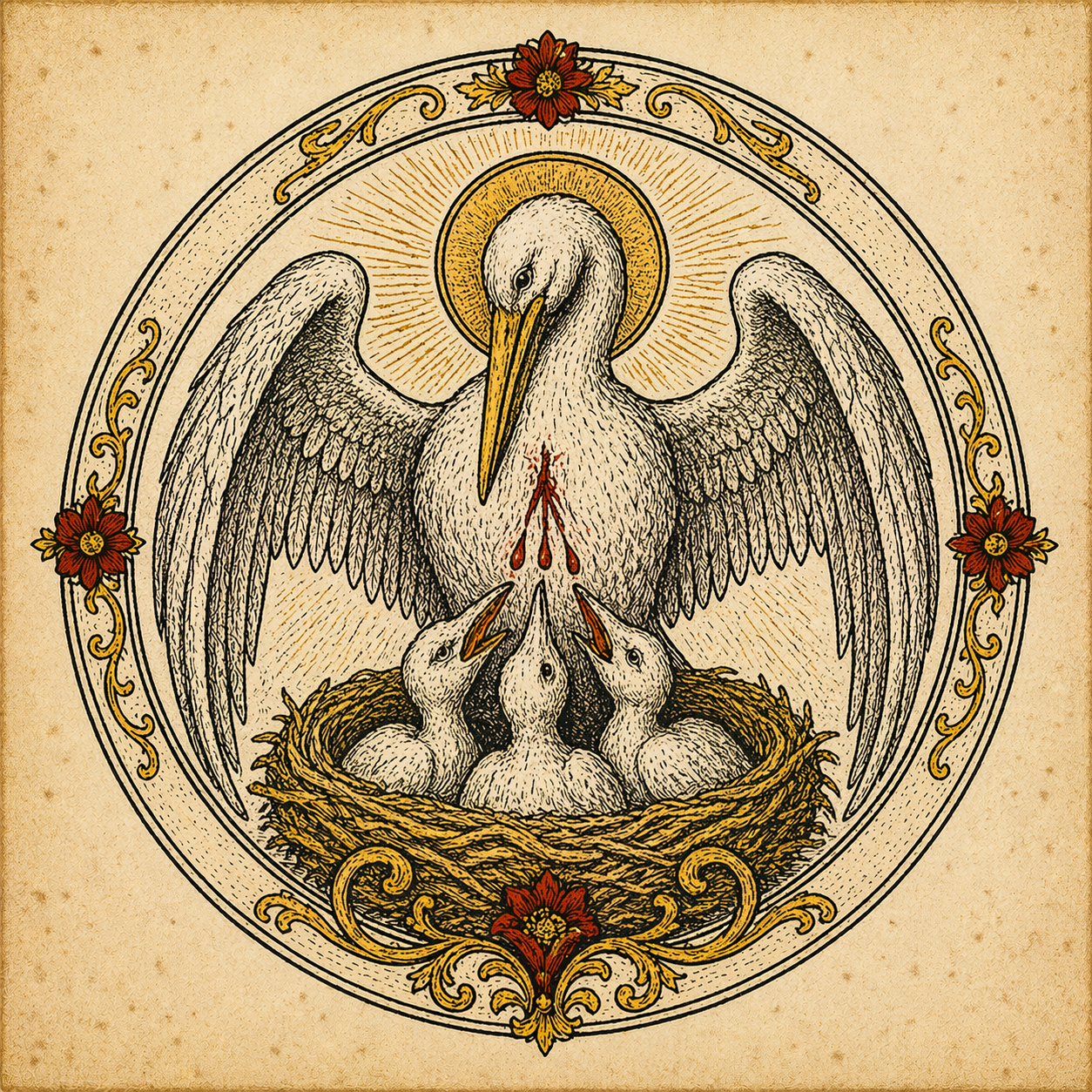
The red of Rubedo is, above all, the colour of blood: and the blood of Christ is
the central alchemical reality of the Christian faith. “This is my blood of the covenant,
which is poured out for many for the forgiveness of sins” (Matthew 26:28).
The Passion, in Nigredo, was the darkening — the divine light extinguished.
But the blood poured out at Golgotha is not merely the evidence of death;
in Christian theology, it is the instrument of life, the tincture that transforms
everything it touches.
The Eucharist is Rubedo enacted repeatedly, ritually, at every altar:
the projectio of the stone’s transforming power into bread
and wine, and through bread and wine into the communicant. The host does not cease
to be the stone by being consumed; it communicates its own nature to the one who
receives it. This is the multiplicatio and
projectio made sacrament: the mystery that the limitless
self-giving of Christ does not diminish Christ but multiplies his presence across
every celebration in every century.
✠
✠
IV. The Wedding of the Lamb: Eschatological Coniunctio
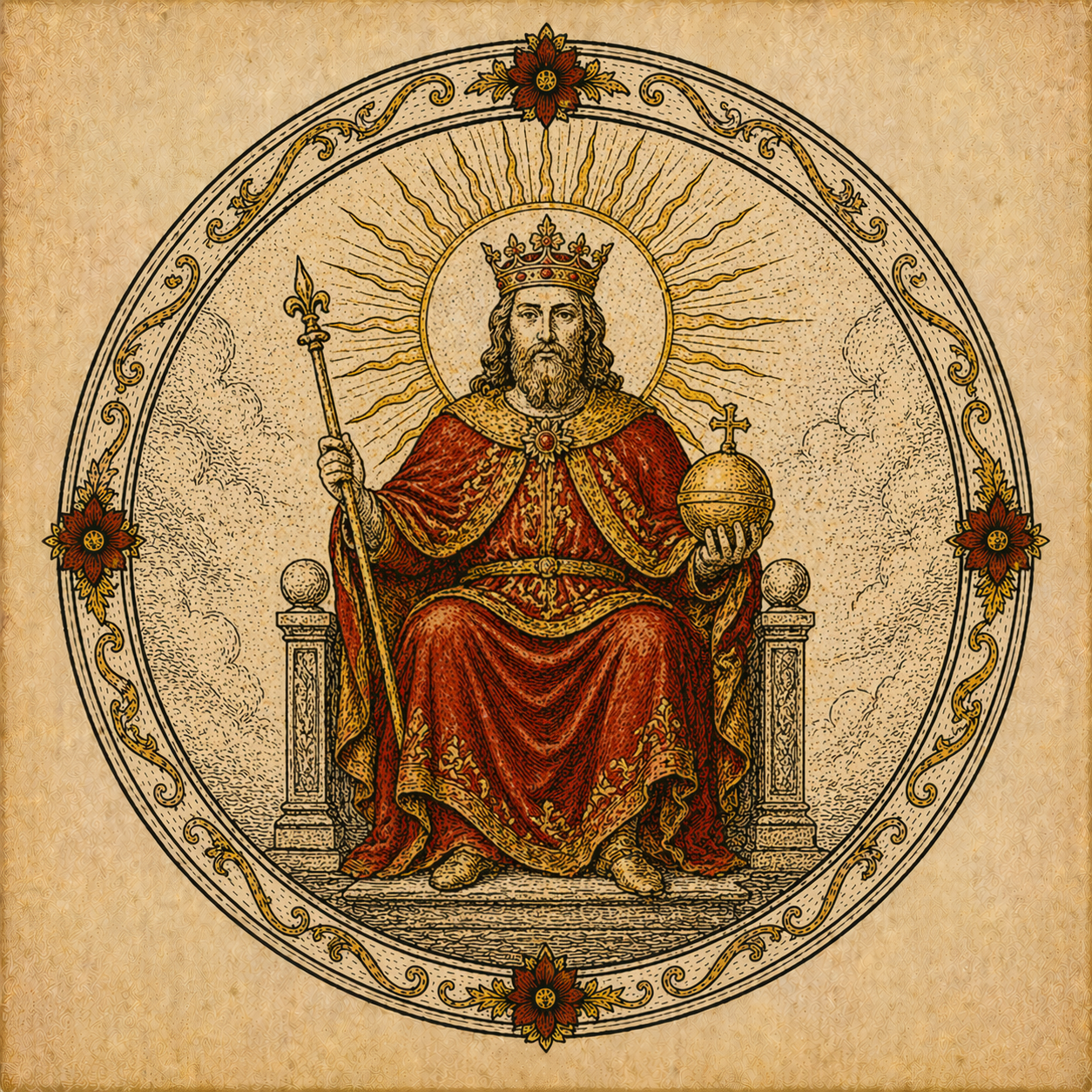
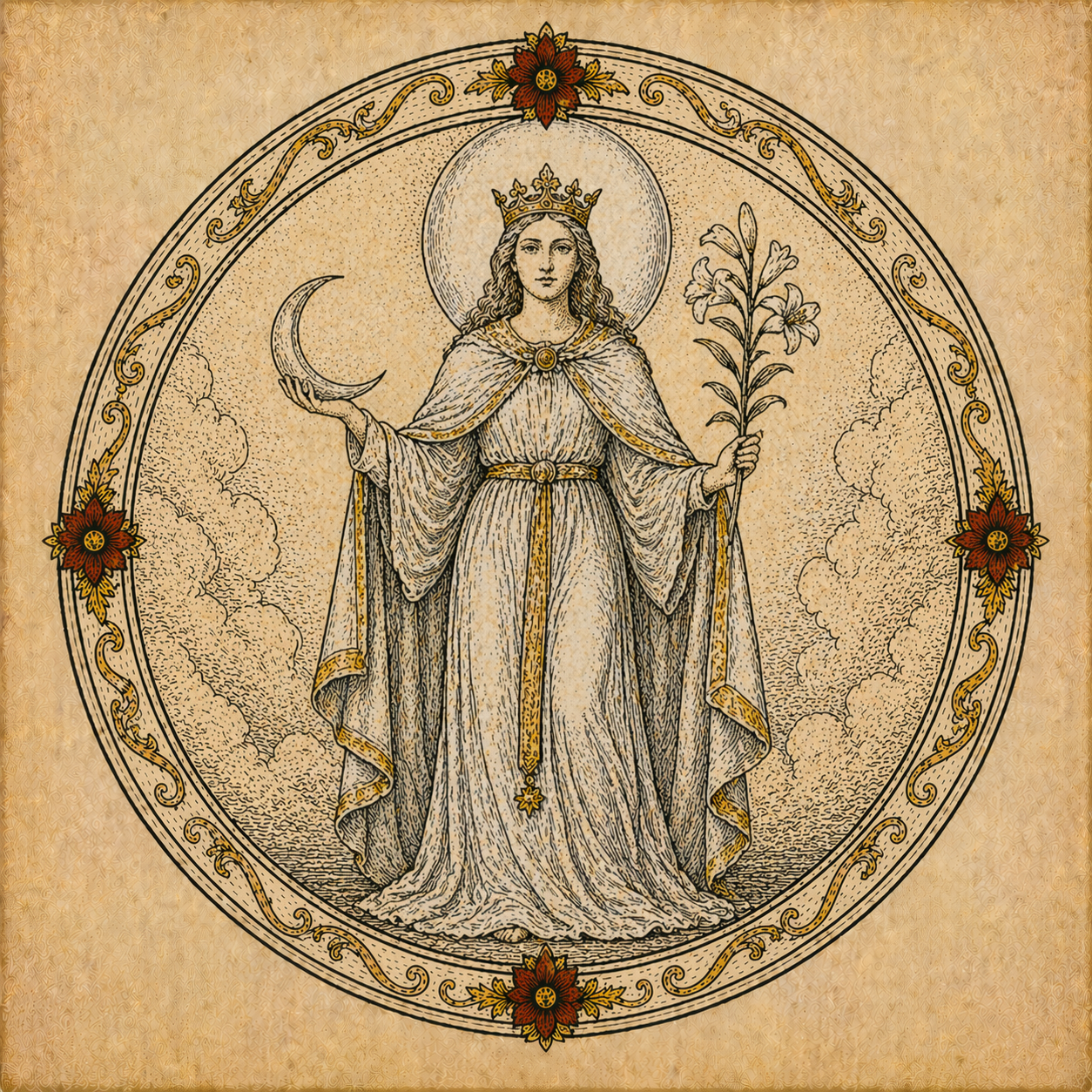
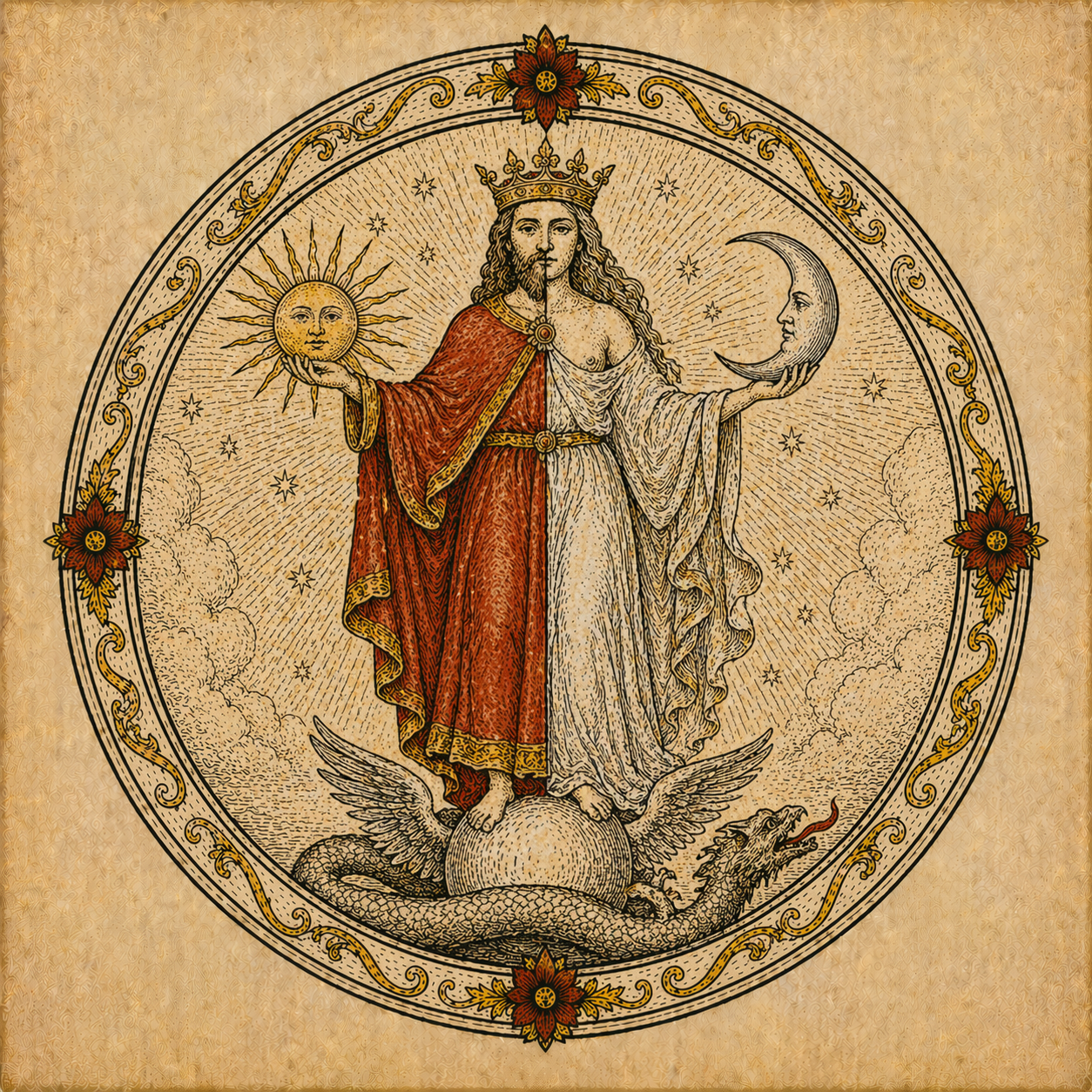
The alchemical hieros gamos — the sacred marriage of king and queen,
Sol and Luna — finds its supreme theological expression in the vision of Revelation 19:
the Wedding of the Lamb. “Blessed are those who are invited to the wedding supper of the Lamb”
(Revelation 19:9). The Bride — the Church, purified humanity, the soul that has passed through
the whole Opus — is at last united with the Bridegroom who is Christ.
This is the coniunctio at the scale of salvation history:
not two individuals joined but two natures, two principles, two histories —
divine and human, eternal and temporal, Creator and creation — brought into a
union that does not abolish their difference but transcends it.
The Bride is still human; the Lamb is still divine. But they are one in
a marriage that is, as Paul says of earthly marriage, a “profound mystery”
whose ultimate referent is “Christ and the Church” (Ephesians 5:32).
Then I heard what sounded like a great multitude, like the roar of rushing waters
and like loud peals of thunder, shouting:
“Hallelujah! For our Lord God Almighty reigns.
Let us rejoice and be glad and give him glory!
For the wedding of the Lamb has come,
and his bride has made herself ready.”
Revelation 19:6–7
✠
V. Theosis: Partakers of the Divine Nature
The Eastern Christian doctrine of theosis — deification, the participation
of the human person in the divine nature — is the most precise theological articulation of
what alchemical Rubedo points toward. “Through these he has given us his very great and
precious promises, so that through them you may participate in the divine nature”
(2 Peter 1:4). Not merely that human beings are forgiven (Albedo), not merely that they
are illuminated (Citrinitas), but that they become, by grace, participants in the very
life of God.
The tradition is careful here: theosis is the communicated divine life,
not the essential divine being. The base metal does not become the sun;
it becomes gold. The human person does not become God; they become, by participation
and adoption, truly and permanently godlike. Athanasius’s formulation — “God became man
so that man might become God” — is the archetype of which alchemical transmutation
is the symbol. The Philosopher’s Stone is grace in action: a power that elevates
and perfects without destroying the nature it enters (gratia perficit naturam,
as Aquinas says). The gold is still gold; it is simply gold.
Through these he has given us his very great and precious promises,
so that through them you may participate in the divine nature
and escape the corruption in the world caused by evil desires.
2 Peter 1:4
✠
VI. The New Creation: The Rubedo Landscape
The final vision of Revelation — the new Jerusalem descending from heaven,
the river of the water of life, the tree of life whose leaves are for the
healing of the nations (Revelation 21–22) — is the Rubedo of cosmic history.
The city is pure gold, like clear glass (Revelation 21:18). The garden-city
is simultaneously the original garden of Eden, recovered and perfected, and
something entirely new: a city, a civilisation, a community of persons
who have become gold not by losing their humanity but by having it
fully realised in the divine life.
The alchemist’s dream — base matter transmuted into gold — finds its final
expression not in a private achievement but in a cosmic consummation:
the whole of creation, purified, restored, and perfected; the whole history
of the Opus, from Prima Materia to Lapis, playing out not only in the
individual soul but in the body of history itself. The exile returns to a garden;
the garden becomes a city; the city shines with a light that needs no sun
because the Lamb is its lamp.