I. The Transfiguration: Albedo in Christ’s Earthly Life
The Transfiguration (Matthew 17:1–9; Mark 9:2–8; Luke 9:28–36) is the supreme Albedo moment
in the Gospel narrative. On a mountain — always the place of divine encounter, the vertical
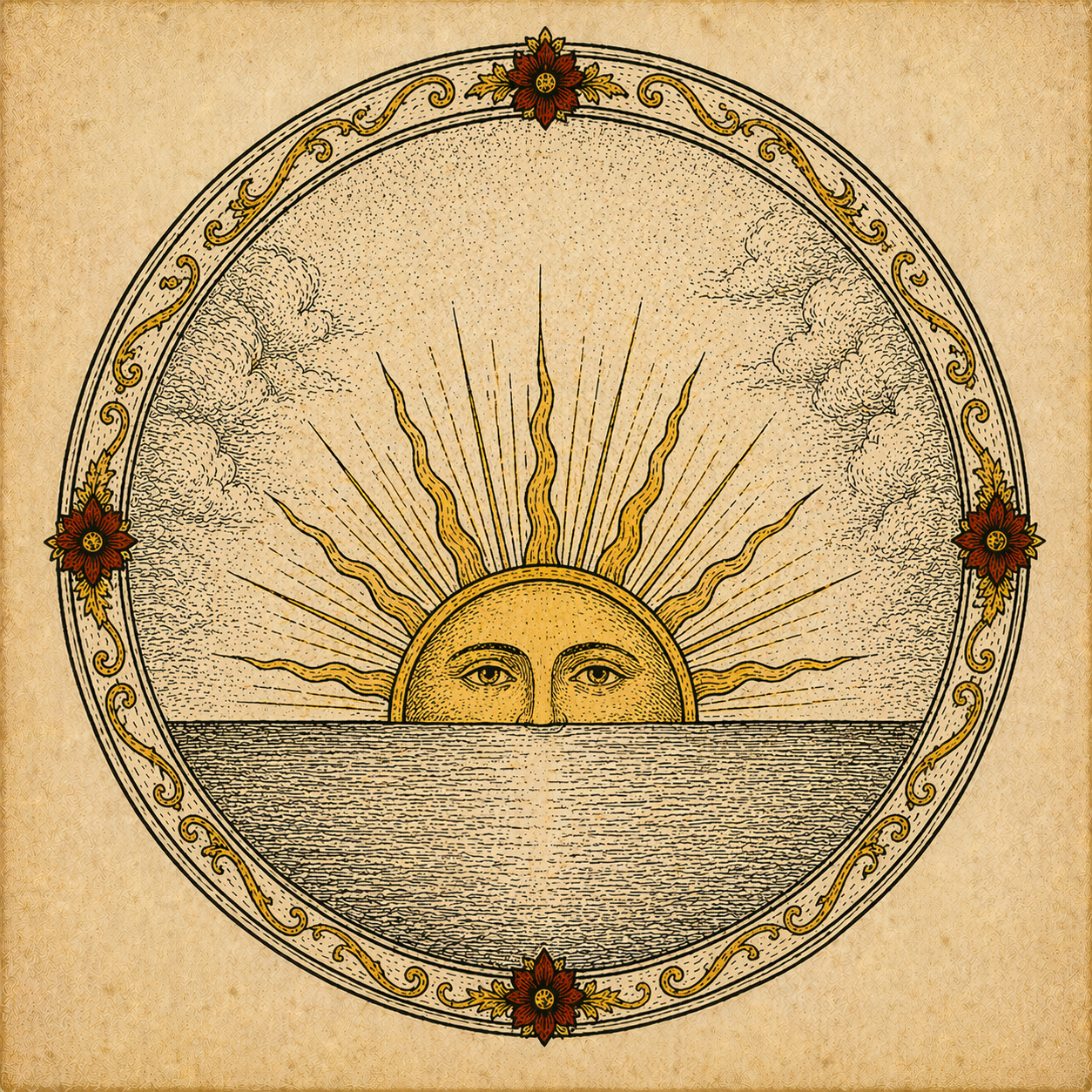
axis where heaven meets earth — Christ’s human form is transfigured: his face blazes like the
sun, his garments become white as light itself, and the voice of the Father speaks from the
cloud. Moses and Elijah appear beside him, linking the moment to the whole arc of sacred history.
For the Christian alchemist, the Transfiguration is not a different event from the Passion
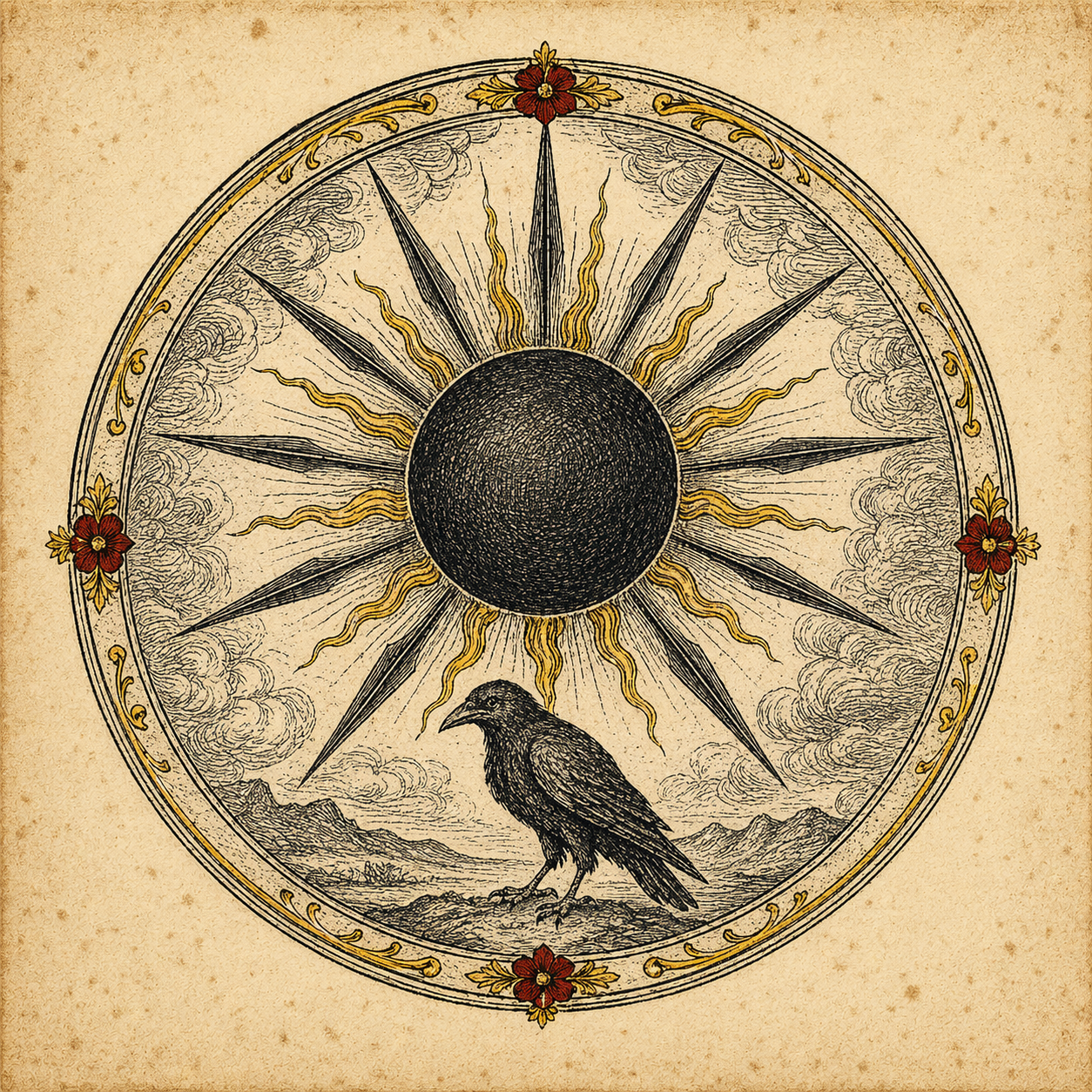
but its necessary complement. Between these two poles — the darkened sun of Golgotha and the
blazing face of Tabor — the whole dynamic of the Christian spiritual life is set.
The Transfiguration reveals what the Incarnate Christ always is: the divine glory
hidden within the human form, the Luna that is secretly filled with solar light.
At Transfiguration, the Sublimatio is performed: the volatile spirit of divinity rises
through the veil of flesh and becomes visible.
Crucially, the Transfiguration precedes the Passion in the Gospel narrative —
it is not simply a reward that follows suffering but a revelation that precedes it.
The disciples are shown the glory so that they will know, when they witness the darkness,
that the light was always there. Albedo, in this sense, is already present in the Nigredo
— it simply awaits the right conditions to become visible.
After six days Jesus took with him Peter, James and John the brother of James,
and led them up a high mountain by themselves. There he was transfigured before them.
His face shone like the sun, and his clothes became white as the light.
Matthew 17:1–2
☽
II. Baptismal White: The Robe of the New Creation
The ancient and continuing practice of robing the newly baptised in white garments —
the chrysom or white vestment — is the liturgical expression
of Albedo. After the descent into the waters of death (Nigredo), the candidate emerges
into white: purified, reborn, clothed not in their own merit but in the righteousness
of the one into whom they have been baptised.
The Book of Revelation reaches for the same image at the cosmic scale: “These are they
who have come out of the great tribulation; they have washed their robes and made them
white in the blood of the Lamb” (Revelation 7:14). The paradox is alchemically precise:
the whiteness comes through the blood, not despite it. The darkness of Nigredo
— the tribulation, the suffering, the dissolution — is what produces the white, not what
prevents it. The robe is washed in what stains ordinary cloth and comes out clean.
This baptismal white is also eschatological: the robes of the martyrs in Revelation,
the wedding garment of the parable (Matthew 22:11–12), the armies of heaven in white
linen (Revelation 19:14) — all of these are images of the consummated Albedo,
the purification that is both already accomplished in baptism and not yet fully
manifested in the life of the believer.
☽
III. Purgation and The Great Divorce
In Catholic and Anglo-Catholic theology, Purgatory is the doctrine
that purification — Albedo — may be a process that continues beyond death, that the
mercy of God does not simply overlook what is unformed and impure in the soul but
works to complete its purification. The tradition is divided and contested, but its
intuition is alchemically sound: Albedo takes time, and time may be more than one
life can always provide.
C.S. Lewis, in The Great Divorce (1945), gave the most vivid imaginative
account of purgatorial Albedo in twentieth-century English. The grey town,
the thin ghost-people who cannot bear the solid reality of the heavenly country,
the gradual hardening and brightening of those who choose to accept the painful
gift of realness — all of this is Albedo dramatised.
Lewis’s key insight is that purgation is not punishment but the painful process
of becoming real enough to bear reality: the progressive solidification and luminescence
of what was previously shadowy and insubstantial.
☽
☽
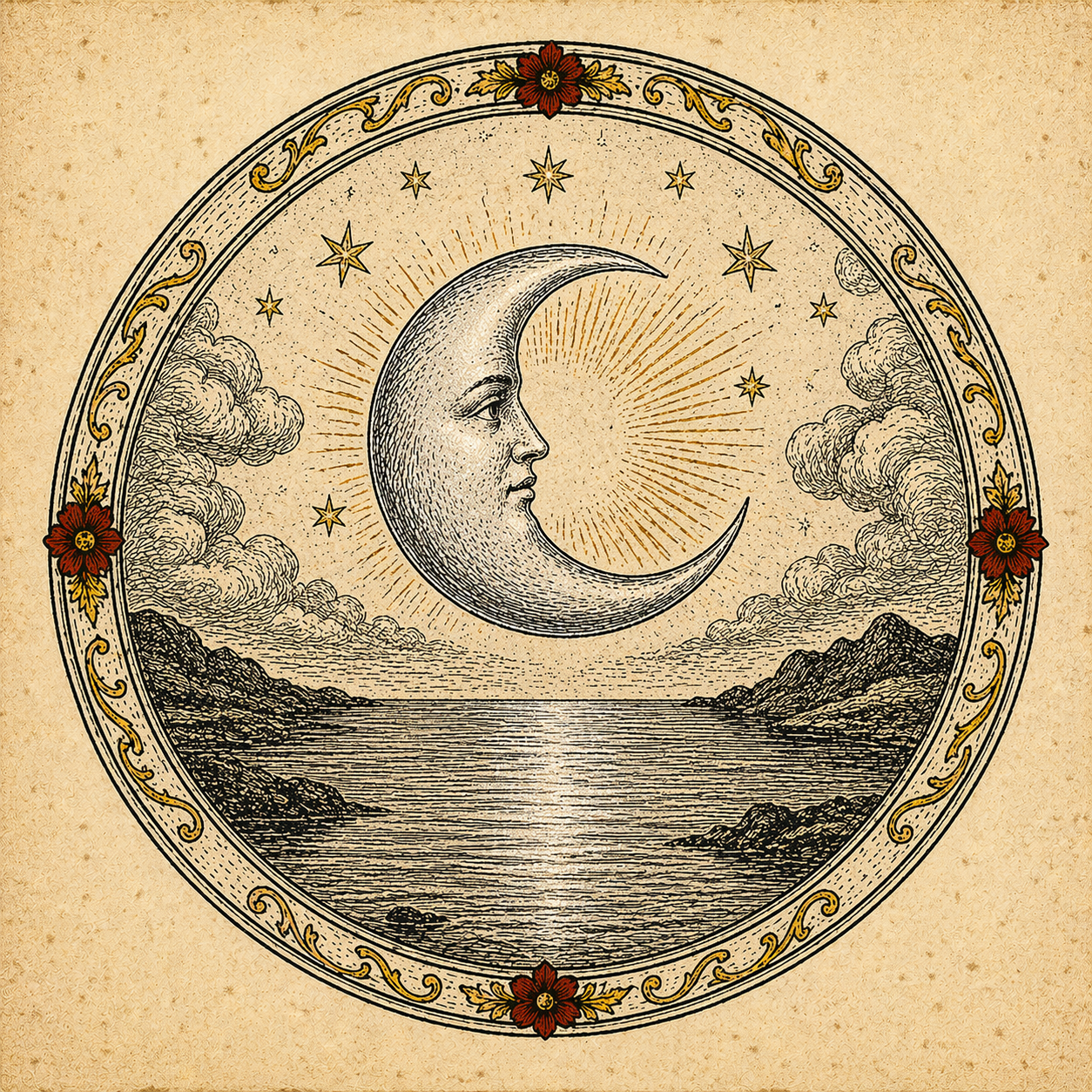
V. The Anima Purified: Mary as Luna Plena
The Christian theological tradition has always associated Mary with the moon —
not merely as poetic imagery but as a precise theological statement about receptivity,
reflection, and mediation. The moon does not generate light; it receives it and
reflects it. Mary does not generate the divine life; she receives the Word and
presents him to the world. She is, in this sense, the supreme embodiment of Albedo:
the purified soul-substance that has become a perfect mirror of the divine radiance.
The Immaculate Conception, interpreted not as a claim about biological process but
as a theological description of the soul’s capacity to receive grace without
the resistance of a darkened will, is an Albedo statement: a human soul so purified,
so transparent to the divine, that the Word can find in her a fitting vessel.
The fiat — “Let it be done to me according to your word”
(Luke 1:38) — is the perfect act of Albedo: the receptive, reflective, entirely
transparent response that neither adds to nor subtracts from what God is doing,
but simply allows it, perfectly.